Donna Tartt, the writing life
Three books in a 30-year career. Her love for literature and fashion. An intimate conversation with the famous and elusive author of The Goldfinch.
I vividly remember it: Milan, Piazza Castello 27, 2nd floor, 4th room on the right. In brief: my office at Vogue Italia, in 1992. The time was early afternoon. In drifted Umberto Pasti: Vogue contributor, writer, gardener, antiquarian, tormented soul in a perennial wandering between Milan, Tangier, and Paris. «You must read The Secret History», he told me quietly, «it is a book you would love». And I did, without questioning him. I’d already heard of Donna Tartt – the next big thing in American literary scene – and her debut novel, which captivated me from its title – in Italian Dio di illusioni, God of Illusions – somehow evocative and mysterious. I loved the elegant flow of her prose, her knowledge and wholehearted love of ancient Greek literature, and the suspense she was able to create page after page although the name of the killers are revealed in the first paragraphs. Fast forward the time machine. I moved to New York to work as a special project editor for Condé Nast, and Donna’s second book The Little Friend came out. I devoured it, as delighted by her bobbed hair and the outfit she boasted on the book jacket as well as by the writing. Then, one day, a friend from Italy invited me to lunch. And there she was: in impeccable navy jacket, starched shirt and grey pants, with vivid red lipstick perfectly matching her nail polish. She was witty, warm and communicative, and her love of fashion was genuine. Maybe this is why we struck up a friendship. When she’s in the city we might walk in the park, see mutual friends, have a shopping spree, or go out for dinner or a drink, and laughing and talking all the while about any subject imaginable, serious as well as frivolous. Donna loves French restaurants, as well the great old American dining staples (she held her Pulitzer dinner which I attended, in a beautiful room in 21), and she also has a passion for independent theaters and bookstores. She writes emails with red ink and sends postcards – nowadays almost an archeological treasure – and gives as presents rare, precious books and Viennese cookies. She is disciplined and eccentric, private and yet very friendly: a true rara avis, one of a kind.
ⓢ You once said: «as a writer I’m giving the reader signs to help create the story with me».
A book is a dream that writer and reader dream together. The writer provides the scaffolding and holds the reader’s hand to lead them in – while the reader provides the daydreams and memories and wishes that fill out the structure, so that the book takes on somewhat the shape of the reader’s mind. Every book is different for every reader, depending what the reader brings to it.
ⓢ You studied classics, as did I. How does the study of past inform your discipline and your writing?
It made me eclectic in my interests. The modern tendency is to bear down narrowly on one small area, but to study the classical world is to study art, architecture, philosophy, mythology, aesthetics, poetry, stagecraft, government. There’s nothing like Plato to teach you to spot a sophist or a demagogue. And even I got sick of ruminating about the Antonine Plague and the Plague of Athens during the pandemic.
ⓢ Do you write by hand or do you use a computer?
Both. With my novels I start out by hand, scratching things out and underlining things in different colors and then when my handwritten pages get too messy, often because I’ve cut the paper up with scissors to move sentences and paragraphs around, I go to the computer and type things in – printing out different colors of paper for different drafts.
ⓢ Can you describe your writing routine?
I write for three hours in the morning. If it isn’t going well, I’ll stop and do something else but if it’s going well I’ll work till I’m tired.
ⓢ Is there a specific place where you prefer writing?
I like to work in quiet rooms. City noises don’t bother me, but I can’t stand overhearing a television. But I can really work almost anywhere. It’s hard for me to concentrate, though, unless the day ahead of me is without interruptions. So when I have errands or appointments, I’ll generally mark the whole day out, and run around from breakfast to lunch to tea to dinner and see friends all day in between whatever I have to do.
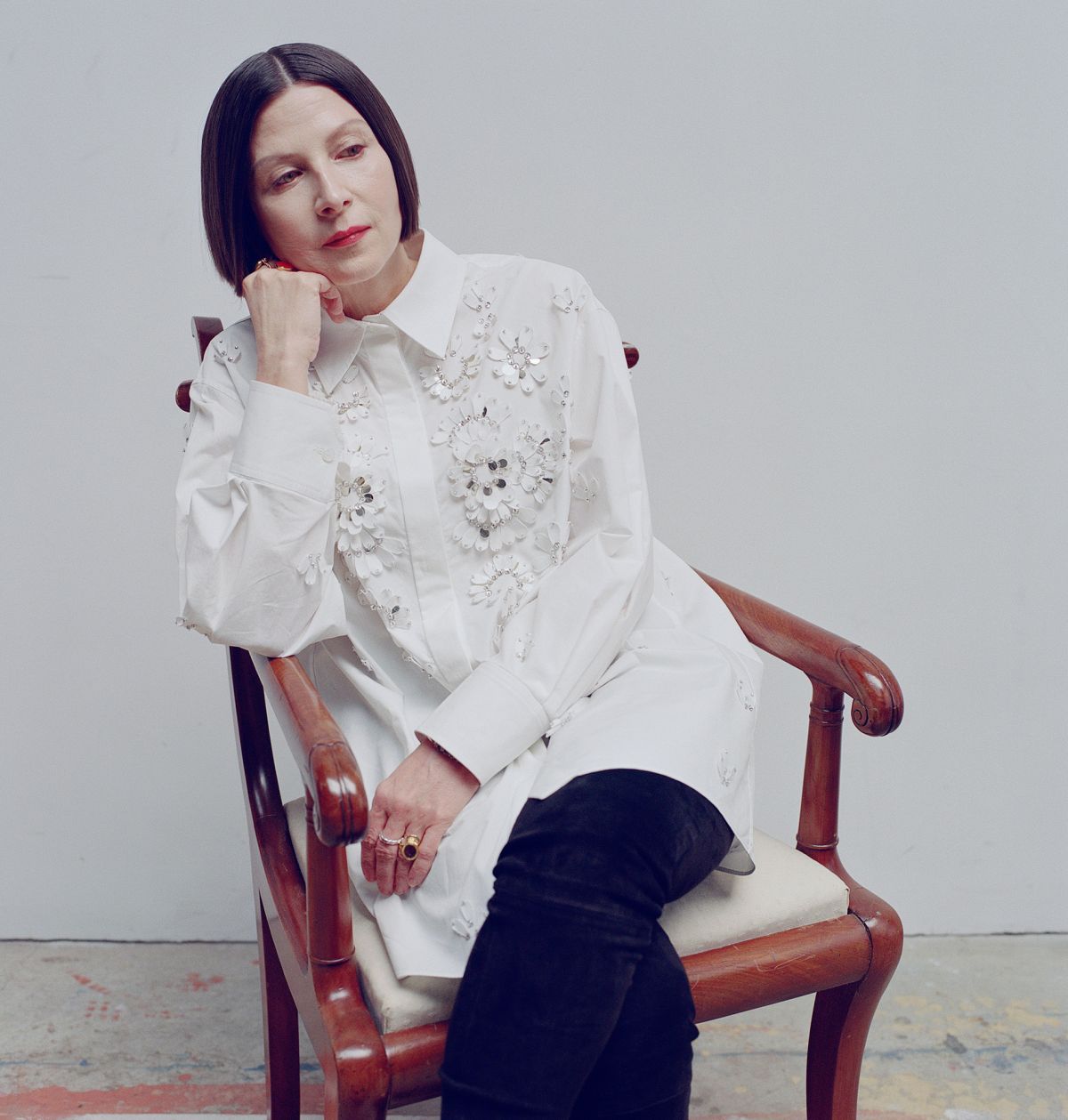
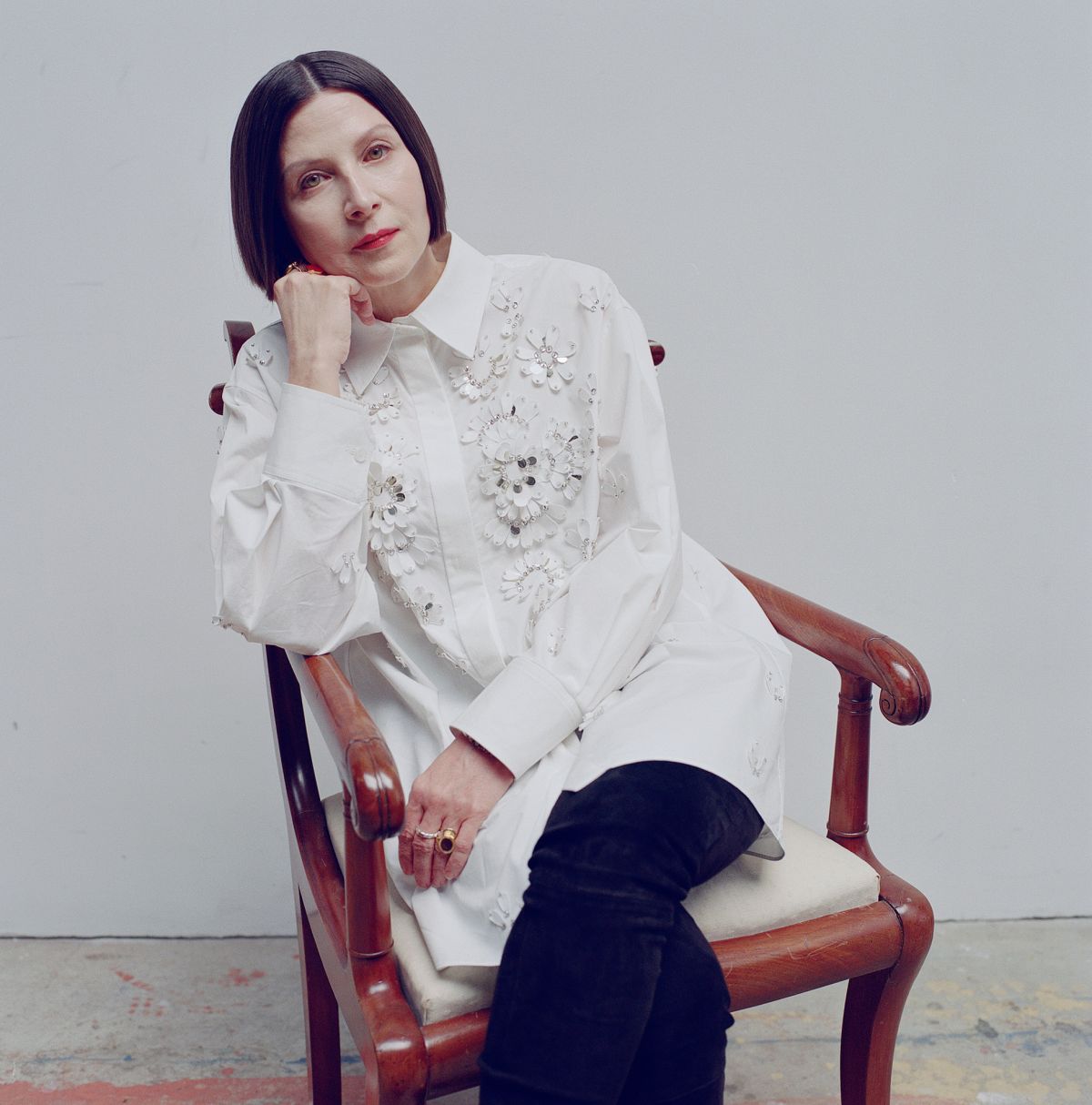
ⓢ You are famous for publishing every 10 years. Is the writing process something excruciating for you?
Not at all. Things don’t seem real to me unless I write them down, which is partly why I carry a notebook everywhere. But publishing a finished work is something different. I don’t much enjoy the publication process.
ⓢ Could you reveal the first idea you had in mind when you started writing The Secret History, The Little Friend and the Goldfinch?
It’s impossible to say – with all my novels there were many different inspirations coming together over quite a long period of time, although I do know that for me it often starts with place, and with mood. The Secret History has to do with the Greek tragedy and Greek philosophy I was reading, with my first experience of a Vermont winter, but also with the Leopold and Loeb murder case and the unsolved 1940s disappearance of a student named Paula Weldon. The Little Friend is a fantasia of my Mississippi childhood. With The Goldfinch I’d known for some time that I wanted to write about Amsterdam, also about New York, and many of the ideas which became The Goldfinch were in my journals twenty years before I began to write the novel. But I can’t really say what was the absolute first inspiration for any of my novels. Many different elements combined unexpectedly in just the right way, and that’s true of the novel I’m working on now, as well.
ⓢ When do you know that your book is finished?
The same way you know when a meal or a joke or a telephone conversation is finished. You just know.
ⓢ You write long books. Does the plot change along the way?
I wouldn’t say it changes, not 180 degrees, but definitely the plot evolves and becomes more complex. Usually I end up where I thought I would, but by a somewhat different route.
ⓢ When did you start loving writing?
Writing, for me, is almost another way of reading, except one level deeper. Almost as soon as I began to read – and I read very early – I began to write.
ⓢ Can you tell us anything about your new novel?
I’m afraid not… If I talked about my book before I was done, there would be no reason for me to finish it.
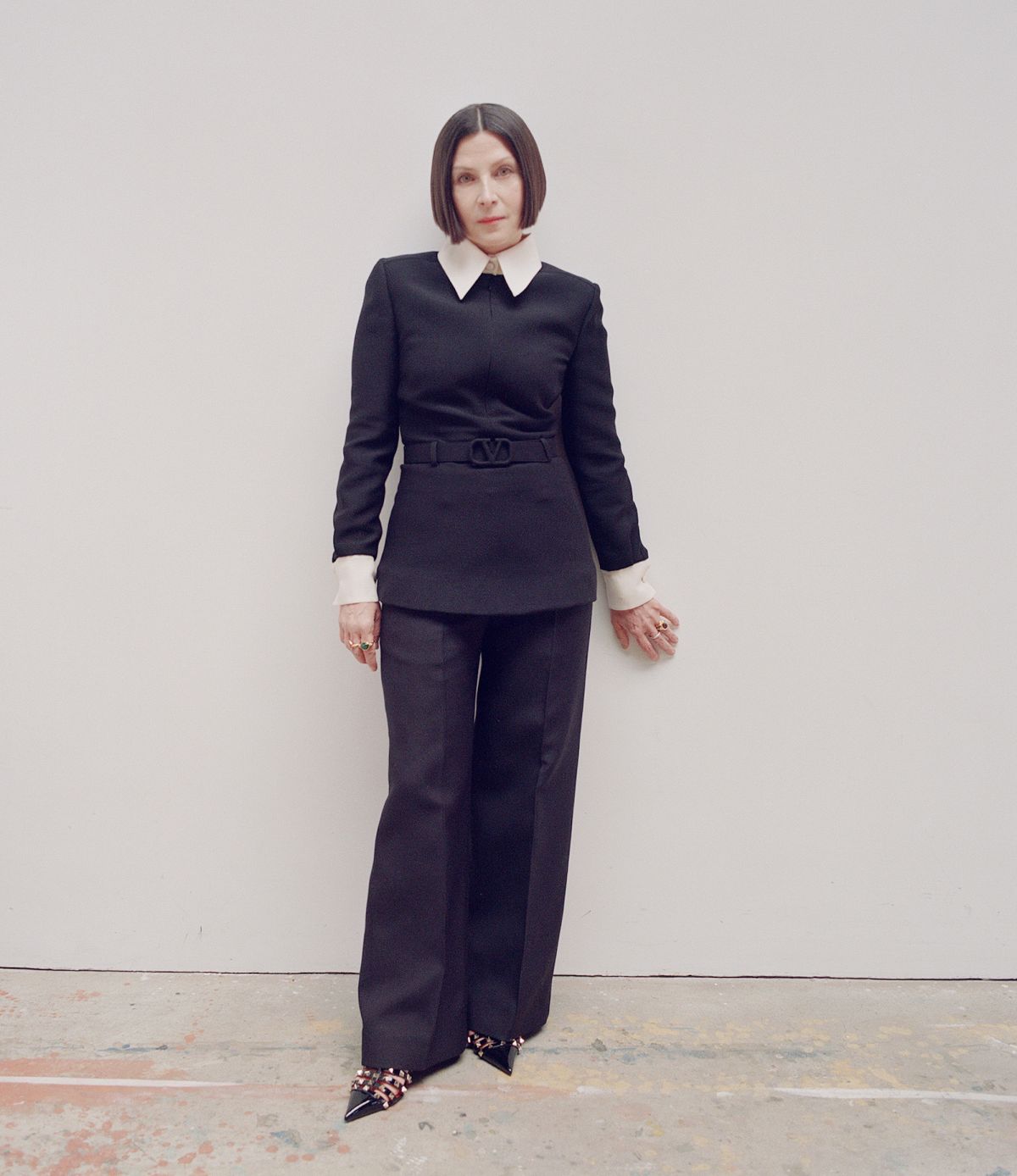
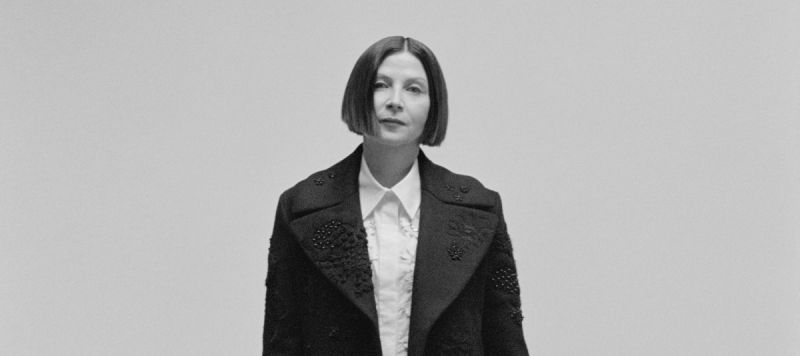
Portrait by Jody Rogac. Donna Tartt wears Valentino Pre-Fall 2021.
ⓢ Do you listen to music when you need a break from writing?
Sometimes while I am writing, too! Baroque music helps me concentrate, and sometimes too ambient music. I listened to Sibelius a lot when I was writing The Secret History – the Nordic mood suited the mood of the book.
ⓢ Who are your favorite singers/composers?
The artist to whom I return continually are Billie Holiday, Thelonious Monk, Chet Baker, Brian Eno, Philip Glass, Glenn Gould. I grew up with pop music and I never get tired of David Bowie or the Velvet Underground or the Jesus and Mary Chain. I love Elliot Smith. Lana del Rey is my favorite pop singer of the last few years. Recently I’ve been listening to a lot of Sidney Bechet.
ⓢ Any classical?
I love early music, like Palestrina and De Machaut. Of composers I love Brahms, Beethoven, Kurt Weill, Mozart.
ⓢ Do you cook?
In the country I have to cook if I want to eat well, and I especially love cooking when I have fresh vegetables from the garden. Although I’m sick of cooking and ready to go back to restaurants now that the pandemic seems to be lightening up.
ⓢ In the era of social media, you don’t have a Twitter account, and you are not on Facebook or Instagram.
In the mid 2000s, I was in India and everyone was talking about social media. It was the first I’d heard of it – it was so long ago that My Space was the thing – and it sounded interesting. But Becky Swift, writer Margaret Drabble’s daughter, who was at my table during a dinner, said to me: «Donna, you MUST not do this, trust me when I say you must never, ever get involved in social media, it dumbs down everything, it will cut into your writing and reading time in ways you can’t imagine. Promise me you’ll never touch it». And I never have. Becky died far too young, and I wonder if she realized quite what a gift she gave me across the table that night. If you happen to read this in Heaven, Becky, thank you.
ⓢ Who are your worshipped writers?
Homer, the Greek poets and tragedians, Dante and Shakespeare are my constant touchstones. I went back and read Macbeth and Hamlet during the pandemic. I also venerate Dickens, Nabokov, Proust, Dostoevsky, Yeats, Borges, Edith Wharton, Evelyn Waugh, Salinger, Virginia Woolfe. Dickens was a part of my familial landscape, the air I breathed.
ⓢ Could you please explain better?
My mother’s family was a family who had read Dickens aloud for generations (a tradition, sadly, that stopped with me) and when I hear certain passages of Dickens, I also hear the voices of my grandmother and her sisters. I thought of Dickens as almost an ancestor – he was a giant part of my life as a child, integral to the way my mother’s family told stories and understood life and character generally, and I was surprised and disappointed when I learned that Dickens was not connected with my family in any way. Although in a more essential way, perhaps he was.
ⓢ Among the contemporary authors who do you like the most?
I tend to read 19th century authors more than 20st or even 21rst. Chateaubriand and Mémoires d’outretombe kept me occupied for much of 2020. That said I love Edward St. Aubyn, Haruki Murakami, Olga Tokarczuk, Don DeLillo, W.G. Sebald, Joan Didion. My favorite books of the pandemic – these were new books to me, though none of these writers are now living – were Jigsaw by Sybille Bedford, All for Nothing by Walter Kempowski and A Balcony in the Forest by Julien Gracq.
ⓢ Do you remember the first book you read?
I certainly do: Wind in the Willows by Kenneth Grahame. It’s still a book I love.
«A book is a dream that writer and reader dream together. The writer provides the scaffolding and holds the reader’s hand to lead them in – while the reader provides the daydreams and memories and wishes that fill out the structure, so that the book takes on somewhat the shape of the reader’s mind. Every book is different for every reader, depending what the reader brings to it»
ⓢ You also love poetry a lot. Did you ever write poems?
I did, and still sometimes do. I started out as a poet. And as a reader I love poetry more than novels and turn to poetry more often for inspiration. I was thrilled when Louise Gluck won the Nobel as she’s one of my favorite living poets.
ⓢ What were you doing when you received the news that you won the Pulitzer for The Goldfinch back in 2014?
I’d been walking my dog, and when I came back in muddy and cold, I could hear shouting upstairs and every phone in the house was ringing. I was in a bit of shock. You don’t know that you are even being considered, and when the news arrived it was a thunderbolt. I stood around shivering in wet clothes, taking call after call until finally I went away to a bath. I re- member the moment I slipped under the water, with the phones still ringing downstairs: only then did it sink in what had happened.
ⓢ You love Italy. What is your favorite city, if you have any, and what you like the most about our country?
Because I studied Classics, maybe my purest love is for Rome. But there are still so many places yet to visit. I love the classical monuments and temples in Sicily, where I spent a bewitching few weeks in my late twenties. Bologna – Morandi’s town – is steeped in the same calm faded light of Morandi’s paintings, so that I felt I already knew the town the first time I saw it. And Venice. I’ve only ever gone to Venice in the off season so I don’t really know the crowded tourist Venice so well. But I love the melancholy late-season Venice when a chill creeps in and the cafe umbrellas rattle in the wind.
ⓢ You have a very special relationship with Capri: in 2011 you were a guest at Le Conversazioni, the literary festival organized by Antonio Monda and Davide Azzolini. In Capri you received the Premio Malaparte in 2018. You even came back to the island as a tourist. What is the secret lure of this place that mesmerizes you?
Well, honestly, I wish it were a little more secret! I don’t so much like the jet-set aspect of it, crowds and expensive suntan lotion and all that. The quiet corners and gardens are what interest me, and the sea. And I love it when Miss Rosalba from Il Laboratorio or the Ferella girls shout my name and run to hug me when I walk in the shop! The people are great and I look forward to seeing them year after year.
ⓢ You are one of the few intellectual and writers that I know who are deeply knowledgeable about fashion. How did it happen?
I was interested in clothes from the time I was tiny – my mother loves clothes, and dressed me well – but my love of fashion per se began with classic films I saw on television. I loved Adrian’s shimmering slip dresses for Jean Harlow in Dinner at Eight. When I was a teenager I became interested in Edith Head, a Hollywood costume designer who was to me the non plus ultra of elegance. I loved the clothes she made for the great stars like Veronica Lake and Lana Turner, but the way that Edith Head dressed herself – white smock and round dark rimmed glasses – made more sense to me and still does.
ⓢ Who are the designers you like to shop?
I love a lot of small designers – IFSoho, in New York, has the best curated collection I know – but of the big ones I love Valentino, Yves Saint Laurent, Carolina Herrera, Dries Van Noten, Chloé, Etro. The first designer pieces I ever bought were from Ann Demeulemeester’s early collections, as well as early Prada, Comme des Garçons, Rick Owens, Jil Sander. I still wear a lot of these clothes, they look as avant-garde as the day I bought them.
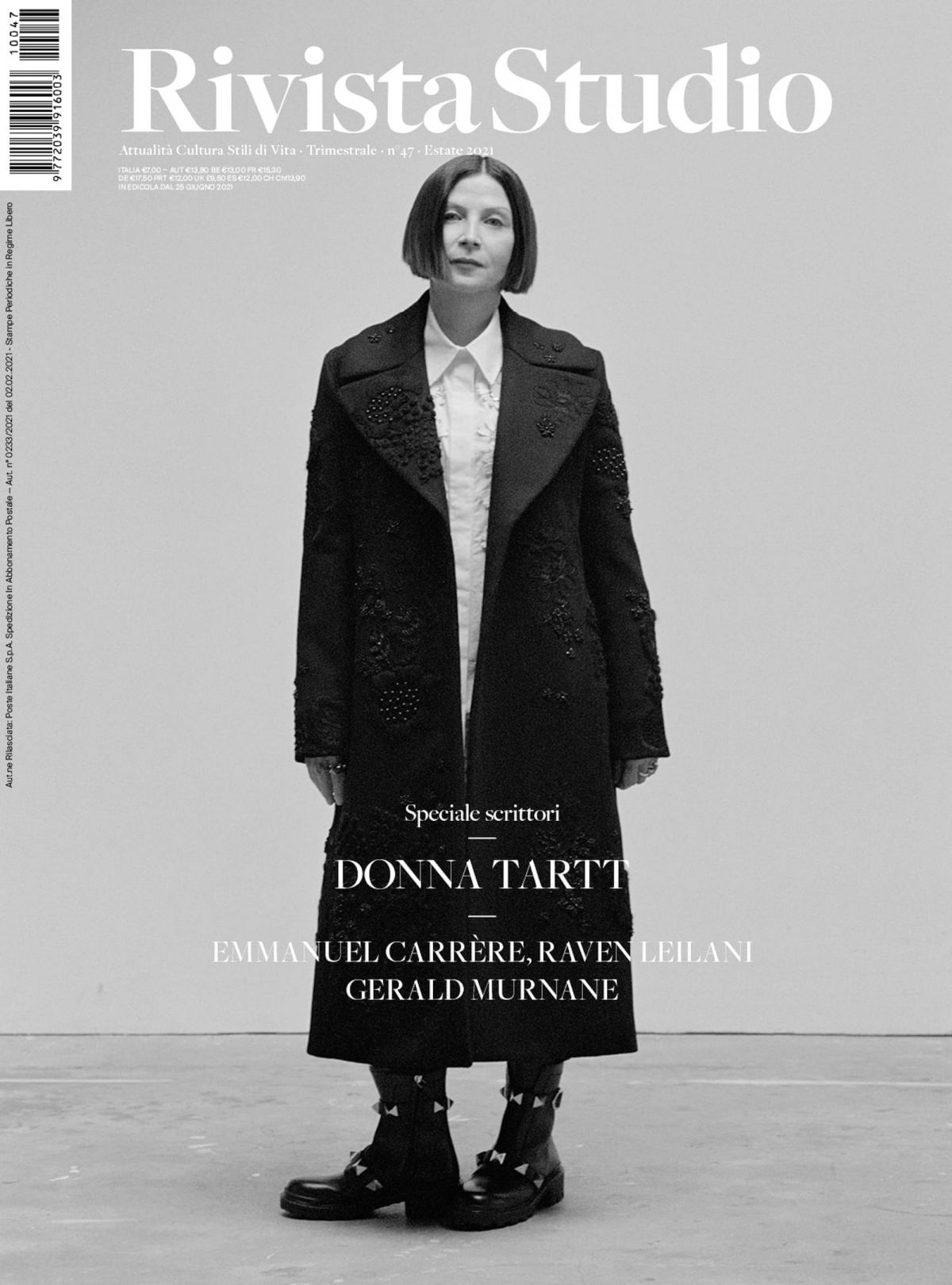
ⓢ And now, I would like to finish this conversation asking five questions from the Proust questionnaire. Let me start with the first one: What is your idea of perfect happiness?
Talking about Capri has made me homesick for Capri. I wish I were on the via Tragara right now buying an orangeade from the opera-singing lady before walking down the stairs to the sea – who was it who called those cliffs «balconies for elegant suicides»?
ⓢ What is the trait you most deplore in yourself?
Carelessness.
ⓢ What is the trait you most deplore in others?
Cruelty.
ⓢ What is your greatest extravagance?
Bringing my pets with me when I travel. I’d gladly travel with a gazelle, like la Marchesa Casati, were it permitted.
ⓢ What is your current state of mind?
Uncertain but optimistic. Happy to be vaccinated and eating in restaurants and seeing friends again.